
Servant of christ
Once Saved Always Saved?
Eternal Security vs Conditional Security
Introduction
Eternal Security vs Conditional Security
In the millennium-old debate between Eternal Security vs Conditional Security, this essay will offer a clear, biblically balanced answer to one of the most important theological questions facing the Church today. It carefully expounds Hebrews 10:26-27’s solemn warning against willful, persistent sin after receiving the knowledge of the truth—showing how such deliberate rebellion risks apostasy and disqualification—while powerfully affirming the unbreakable security of genuine believers who are kept by God’s power as new creations in Christ (John 10:27-29; Romans 8:38-39; Philippians 1:6). By framing salvation as a race of faith that must be run with perseverance and sanctification, the essay beautifully reconciles Scripture’s warnings against falling away with its unshakable promises of eternal assurance for those who truly belong to Christ.
TABLE OF CONTENTS
Once Saved Always Saved?
- The True Nature of Sin
- Drawing of God
- The Danger of Willful Sin
- Free Will, Willful Apostasy
- The Parable of the Ten Virgins
- The Thief on the Cross
- The Beatitudes
- Realization of Salvation
- Eternal Security
1. The True Nature of Sin:
Lawlessness, Death, and the Need for Grace
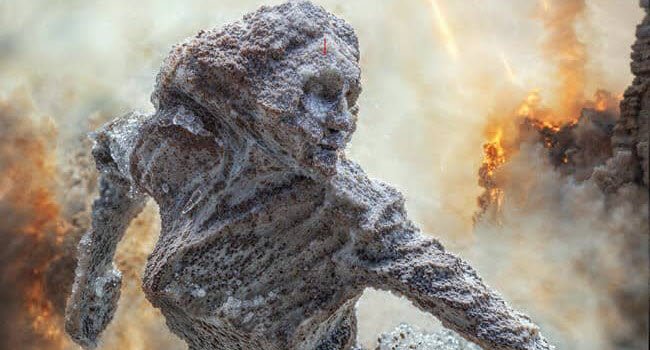
Sin, according to Scripture, is far more than individual bad actions — it is a profound spiritual reality rooted in rebellion against God’s authority and will.
The clearest definition comes from 1 John 3:4: “Everyone who sins breaks the law; in fact, sin is lawlessness.” This means sin is any violation of God’s holy law, whether in thought, word, or deed. The Bible also describes it as “missing the mark” of God’s perfect standard (Romans 3:23 — “for all have sinned and fall short of the glory of God”). Sin includes not only what we do wrong (sins of commission), but also what we fail to do right (James 4:17 — “If anyone knows the good they ought to do and doesn’t do it, it is sin for them”).
At a deeper level, sin is a condition of the human heart, not just external behavior. Jeremiah 17:9 says, “The heart is deceitful above all things and beyond cure. Who can understand it?” Jesus reinforced this when He taught that evil actions flow from an evil heart (Matthew 15:19). Because of Adam’s original sin, this fallen nature was passed down to all humanity (Romans 5:12 — “sin entered the world through one man, and death through sin, and in this way death came to all people”). This explains why sin is universal and why even our “best” efforts are tainted.
Ultimately, sin is serious because it separates us from God and brings spiritual death (Romans 6:23 — “the wages of sin is death”). Yet the same verse immediately points to hope: “but the gift of God is eternal life in Christ Jesus our Lord.” Sin is not the end of the story — redemption by winning the race is.

2. Drawn by God:
Running the Race of Faith
In the depths of our lost and helpless condition—dead in trespasses and sins—God extends a gracious and powerful drawing toward Himself. Jesus declared, “No one can come to me unless the Father who sent me draws them” (John 6:44). This divine drawing is not passive, but the sovereign initiative of a loving God. By the power of His Holy Spirit, He awakens the human heart, stirring it from spiritual slumber, convicting of sin, and enabling the first steps of faith by imparting a measure of faith (Romans 12:3).
Scripture portrays this journey as the beginning of a cross-country endurance race—one filled with both sunlit peaks and shadowed valleys. It demands focus, discipline, endurance, and wholehearted perseverance. The writer of Hebrews exhorts us:
“Therefore, since we are surrounded by such a great cloud of witnesses, let us throw off everything that hinders and the sin that so easily entangles. And let us run with perseverance the race marked out for us, fixing our eyes on Jesus, the pioneer and perfecter of faith” (Hebrews 12:1-2).
This race is profoundly personal; its length and difficulty are shaped by each soul’s response to God’s drawing. For some, the race is short and decisive—swift surrender to Christ as Lord and Savior brings them across the finish line in triumph. For others, it becomes a long and winding journey marked by years of gradual yielding, repeated resistance, or painful seasons of unbelief. Tragically, many never finish. Through persistent refusal, hardened unbelief, or final denial of Christ, they bring their race to a premature close—forever separated from the presence of God.
If we die physically before crossing the finish line—before truly winning the race of faith through persevering surrender to Christ—then we remain spiritually dead forever, absent from the presence of God. Willful, persistent sin after receiving the knowledge of the truth hardens the heart and leads to disqualification. As Hebrews 10:26-27 warns, “If we deliberately keep on sinning after we have received the knowledge of the truth, no sacrifice for sins is left, but only a fearful expectation of judgment and of raging fire that will consume the enemies of God.” True salvation belongs only to those who finish the race. This sobering reality calls us today to throw off every sin that entangles, fix our eyes on Jesus, the pioneer and perfecter of faith (Hebrews 12:2), and run with perseverance—so that we may receive the crown of righteousness.
Yet in the end, victory is not measured by how fast or how flawlessly we run. The race is won by simply accepting God’s gift of grace through faith in Jesus Christ. As the Apostle Paul declared about his own race:

3. The Danger of Willful Sin:
A Threat to Finishing the Race
Willful sin poses a direct threat to successfully completing this race.
Unlike sins of ignorance or weakness—against which believers find mercy through confession and the advocacy of Christ (1 John 2:1)—willful, deliberate, and persistent sin represents a conscious choice to turn away from God’s known will. The book of Hebrews issues a sobering warning: “If we deliberately keep on sinning after we have received the knowledge of the truth, no sacrifice for sins is left, but only a fearful expectation of judgment and of raging fire that will consume the enemies of God” (Hebrews 10:26-27).
This warning echoes throughout Scripture. In the same epistle, we read of those who were once enlightened, tasted the heavenly gift, shared in the Holy Spirit, tasted the goodness of the word of God and the powers of the age to come, and then fell away: “It is impossible for them to be brought back to repentance” because they are crucifying the Son of God all over again and subjecting Him to public disgrace (Hebrews 6:4-6).
The author urges believers: “See to it, brothers and sisters, that none of you has a sinful, unbelieving heart that turns away from the living God. But encourage one another daily, as long as it is called ‘Today,’ so that none of you may be hardened by sin’s deceitfulness. We have come to share in Christ, if indeed we hold our original conviction firmly to the very end” (Hebrews 3:12-14).
Willful sin entangles the runner, weighs down the soul, dulls spiritual sensitivity, and eventually hardens the heart (see also Hebrews 12:1). It distracts the eyes from Jesus—the author and perfecter of our faith—and fixes them instead on temporary pleasures or self-justification (Hebrews 12:2). Like a marathon runner who repeatedly steps off the course to indulge in distractions, the one who clings to willful sin risks disqualification. This is not because God is eager to reject, but because persistent rebellion reveals a heart that ultimately does not value the prize.
Jesus Himself taught, “If you hold to my teaching, you are really my disciples. Then you will know the truth, and the truth will set you free” (John 8:31-32), and in the vine metaphor: “If you do not remain in me, you are like a branch that is thrown away and withers; such branches are picked up, thrown into the fire and burned” (John 15:6).
The Apostle Peter warns of those who “have known the way of righteousness” but turn back: “It would have been better for them not to have known the way of righteousness, than to have known it and then to turn their backs on the sacred command that was passed on to them” (2 Peter 2:20-22).
Paul echoes this: “You who are trying to be justified by the law have been alienated from Christ; you have fallen away from grace” (Galatians 5:4). He also applies the race imagery: “Do you not know that in a race all the runners run, but only one gets the prize? Run in such a way as to get the prize… No, I strike a blow to my body and make it my slave so that after I have preached to others, I myself will not be disqualified for the prize” (1 Corinthians 9:24-27).
Jesus declared, “The one who endures to the end will be saved” (Matthew 24:13), and Paul reminded the Colossians that God has reconciled them “if you continue in your faith, established and firm, and do not move from the hope held out in the gospel” (Colossians 1:23).
Willful sin severs the vital fellowship with God necessary for endurance. It is a turning away from the living God, a trampling underfoot of the Son of God, and an insult to the Spirit of grace (Hebrews 10:29). Yet the good news remains: while we are in the race, today is the day of salvation. Repentance and renewed dependence on Christ restore the runner who has stumbled but not yet hardened their heart in final rejection. The warnings call us to diligence, mutual encouragement, and perseverance—so that we may finish the race and receive the crown of life (James 1:12; 2 Peter 1:10-11).
These verses together emphasize the biblical call to perseverance in faith while highlighting the real danger of apostasy through persistent, knowing rejection of Christ. They serve as both warning and motivation to run with endurance, fixing our eyes on Jesus.

4. Free Will, Willful Apostasy,
and Perseverance in the Race of Faith
Upon receiving God’s gracious drawing and coming to a clear knowledge of the truth, if a person deliberately and persistently continues in willful sin—thereby rejecting Christ—no sacrifice for sins remains, but only a fearful expectation of judgment (Hebrews 10:26-31). In this sense, abandoning “the race of faith” described in Hebrews 12:1-2 is not an accidental slip, but a conscious, willful decision. It is a deliberate rejection of God’s gift of grace, resulting in the loss of the prize reserved only for those who finish the race.
Prior to salvation, we were dead in trespasses and sins. In that lost and helpless state, the Holy Spirit convicts the world of sin, righteousness, and judgment (John 16:8). He draws people to the Father (John 6:44) and woos the heart with prevenient grace, imparting to each person a measure of faith (Romans 12:3) that enables a genuine response without coercing the human will. As Jesus said, “If anyone hears my voice and opens the door, I will come in and eat with that person, and they with me” (Revelation 3:20). God therefore calls every person to freely choose: “Choose this day whom you will serve” (Joshua 24:15), for “whoever believes in him shall not perish but have eternal life” (John 3:16).
When a person responds in faith and wins the race by receiving God’s gift of salvation, they are truly saved. They become a “new creation” (2 Corinthians 5:17). The old self is crucified with Christ—its guilt forgiven, its sinful nature cleansed, and its dominating power broken. At that moment of new birth, the believer passes permanently from spiritual death into eternal life. Once reborn—having already been spiritually dead—they cannot die a second time. This new birth is not a temporary experience but a permanent spiritual reality brought about by the Holy Spirit. Jesus declared, “Very truly I tell you, no one can see the kingdom of God unless they are born again” (John 3:3). The old has gone; the new has come.
From that point forward, the lifelong process of sanctification begins, as the Holy Spirit works within the believer to progressively conform them to the image of Christ. As Paul wrote, “And we all, who with unveiled faces contemplate the Lord’s glory, are being transformed into his image with ever-increasing glory, which comes from the Lord, who is the Spirit” (2 Corinthians 3:18).
Scripture, therefore, presents both solemn warning and unshakable assurance. Hebrews 10:26-31 stands as a serious caution even for those who have entered the race of faith, urging perseverance to the end. At the same time, the promises of the new birth affirm the eternal security of those who are genuinely born again. Those who truly belong to Christ are kept by His power after finishing the race of faith, for the life He imparts is eternal as versed –
“My sheep listen to my voice… I give them eternal life, and they shall never perish; no one will snatch them out of my hand” (John 10:27-29).
Nothing “in all creation will be able to separate us from the love of God that is in Christ Jesus our Lord” (Romans 8:38-39).
Believers are “sealed with the promised Holy Spirit, who is a deposit guaranteeing our inheritance” (Ephesians 1:13-14).
“Whoever hears my word and believes him who sent me has eternal life and will not be judged but has crossed over from death to life” (John 5:24).

5. The Urgent Call to Surrender in the Parable of the Ten Virgins
The Parable of the Ten Virgins (Matthew 25:1-13) stands as one of our Lord’s most sobering warnings about the absolute necessity of being genuinely prepared for Christ Jesus’ return. “Then the kingdom of heaven will be like ten virgins who took their lamps and went to meet the bridegroom” (Matthew 25:1). All ten presented an outward appearance of readiness and virtue while waiting for the bridegroom’s arrival. Yet only five were wise.
John 6:44 reminds us that “No one can come to me unless the Father who sent me draws him.” God’s drawing begins by giving every person a measure of faith (Romans 12:3). This initial grace invites each individual into the Race of Faith (Hebrews 12:1-2), where we must choose to accept or deny God’s gift of salvation through grace.
In the parable, all ten virgins had entered the race—they all had lamps and some oil, symbolizing an initial portion of faith and the common grace extended to those who enter the Race of Faith. But only the five wise virgins finished the race. They had surrendered to Christ Jesus, as Lord and Savior, as evidenced by their extra vessels of oil and lamps burning brightly with the glory of God. The oil represents the indwelling Holy Spirit and a genuine, abiding relationship with Christ (see also 2 Corinthians 1:21-22; Ephesians 1:13-14; Romans 8:9).
The five foolish virgins, though they began well, exhausted their initial portion of oil through persistent refusal and hardened unbelief. When the cry rang out at midnight, and the bridegroom arrived, their lamps were going out. In panic, they tried to buy more oil, but it was too late. While they were away, “the bridegroom came, and those who were ready went in with him to the marriage feast, and the door was shut” (Matthew 25:10). The others came later, pleading, “Lord, Lord, open to us,” only to hear the devastating reply: “Truly, I say to you, I do not know you” (Matthew 25:11-12).
Jesus deliberately chose the image of virgins—pure and outwardly respectable young women—to drive home a piercing truth: no amount of moral conduct, religious appearance, or external virtue can carry anyone across the finish line. Many will say to Him on that day, “Lord, Lord, did we not prophesy in your name, and cast out demons, and do many mighty works?”—yet He will declare, “I never knew you; depart from me, you workers of lawlessness” (Matthew 7:22-23). Outward profession without inward surrender and perseverance in faith is not enough.
Therefore, the urgent warning of the parable is this:
“Watch therefore, for you know neither the day nor the hour” (Matthew 25:13). True readiness requires surrender to Christ Jesus as Lord and Savior—receiving and walking in the fullness of the Holy Spirit, abiding in Him, and enduring to the end (Matthew 24:13; John 15:4-6; Hebrews 3:6, 3:14; 1 John 2:19).

6. The Thief on the Cross and the Race of Faith:
Understanding Conditional Security
.
Conditional security of salvation, as it relates to the thief on the cross (Luke 23:39-43), illustrates both the immediate, gracious power of genuine faith and the ongoing call to persevere in that faith. The dying thief, moments from eternity, repented of his mockery, confessed Jesus’ innocence and lordship, and placed his trust in the Messiah—receiving the Lord’s promise, “Today you will be with me in paradise,” with no opportunity for works, baptism, or long-term fruit. In this way, though he entered the race of faith at the very last moment (Hebrews 12:1-2), he won it decisively by fixing his eyes on Jesus, the author and perfecter of our faith, crossing the finish line through sincere repentance and unwavering trust in the final seconds of his life. This powerfully demonstrates that salvation is by grace through faith alone, not earned merit, and that even at the final hour, genuine faith secures eternal life. Under the New Covenant, conditional security applies to those still running the race—requiring continued abiding in Christ, fruitfulness, and vigilance against falling away through willful sin or unbelief (Hebrews 10:26-39; John 15:1-6; Colossians 1:21-23)—while eternal security belongs to those who have finished and won the race of faith. His story thus affirms initial justification by faith while underscoring that enduring to the end is the biblical mark of those truly saved (Matthew 24:13), reminding believers that the same grace that saves in a moment also empowers a lifetime of faithful obedience under the law of Christ.

7. The Beatitudes
The Beatitudes describe the inner character and surrendered spirit that has yielded to Him. As Hebrews 12:1-2 exhorts, we are to “run with perseverance the race marked out for us, fixing our eyes on Jesus, the pioneer and perfecter of faith.” True surrender to Christ Jesus is not merely an initial decision but a transformative work of the Holy Spirit that plants and cultivates the very attitudes of the Beatitudes deep within the believer’s heart. Those who have surrendered and have won the Race of Faith no longer rely on their own strength or righteousness; instead, Christ shapes their spirit and character to reflect His own, producing the humble dependence and holy resolve necessary to lay aside every weight and sin that so easily entangles.
“Blessed are the poor in spirit, for theirs is the kingdom of heaven” (Matthew 5:3) and “Blessed are the clean [pure] in heart, for they will see God” (Matthew 5:8) beautifully illustrate this instilled reality. ** The surrendered heart recognizes its spiritual poverty apart from Christ and clings to Him alone for righteousness, grace, and strength. This humility and purity flow from the new heart God gives us in the New Covenant (Ezekiel 36:26-27), where the Holy Spirit writes His law of love upon us. No longer hardened by pride or divided by worldly attachments, the believer’s heart is cleansed and renewed, fostering an intimate walk with God that sustains endurance through worldly trials.
Likewise, “Blessed are the peacemakers, for they will be called children of God” (Matthew 5:9) and “Blessed are they who are persecuted for the sake of righteousness, for theirs is the kingdom of heaven” (Matthew 5:10) mark the outward fruit of this surrendered life.** Christ instills a reconciling spirit that mirrors His own peacemaking work on the cross, while also granting the courage to stand firm amid opposition. These qualities empower believers to press on, enduring hardship as discipline and sharing in Christ’s sufferings so they might also share in His glory (Romans 8:17).
Ultimately, those in whom the Beatitudes have taken root have crossed the finish line of the Race of Faith victorious, because the Beatitudes are not self-generated virtues, but the very character of Christ being formed in them by the Holy Spirit.

8. How does someone realize,
they are truly saved in real terms?
You realize you are truly saved, and have won The Race of Faith, when you turn from your sin, surrendering your life to Jesus Christ as Lord, and trust only in His death and resurrection for forgiveness and new life (Romans 10:9; John 3:36). In everyday life, this shows as a real change: you start hating sin and wanting to stop it, you love other Christians and want to be with them, and you see the fruit of the Spirit growing — more patience, kindness, joy in hard times, and obedience to Jesus (Galatians 5:22-23; 1 John 2:3-6). It’s not about being perfect, but about a genuine new direction under His control.
The process of sanctification can often feel like “one step forward and two steps back“—and that’s a very common, honest experience for believers. But biblically, it’s not ultimately regressive. The overall trajectory is forward progress by the power of the Holy Spirit, even through setbacks, stumbles, and seasons of apparent failure.
Setbacks are real but not final. God’s grace covers failures (1 John 1:8-9), and He uses even our stumbles for growth—teaching humility, dependence, and reliance on His strength (2 Corinthians 12:9-10).
When sins, doubts, and failures come, quickly confess them, repent, and renew your surrender to Jesus. Then rest with strong conviction in His promises and finished work on the cross, not your feelings (1 John 1:9; John 10:28-29). If you keep trusting and surrendering while seeing real growth — even if imperfect — you can be confident you are truly saved and have eternal life.
The Apostle Paul’s testimony in 1 Timothy 1:14-16 offers powerful assurance of eternal security for every believer. Though he called himself the worst of sinners, our Lord poured out abundant grace upon him, granting faith and love in union with Christ Jesus. God showed Paul full mercy and patience so that he could serve as a living example for all who would later believe. The promise is clear and trustworthy: those who put their faith in Christ Jesus receive eternal life. This is not a temporary or conditional gift, but a certain outcome of God’s saving work for all those who have won, The Race of Faith. Just as Paul was securely brought from the depths of sin into eternal life, so every genuine believer can rest confidently in the same unchanging grace that saves to the uttermost.
Always remember Ephesians 2:8-9 “For by grace you have been saved through faith; and that not of yourselves, it is the gift of God; not as a result of works, so that no one may boast.”
“I write these things to you who believe… so that you may know that you have eternal life.” (1 John 5:13)
9. Eternal Security
Perseverance of the Saints
How Jesus Actively Treats Born-Again Believers
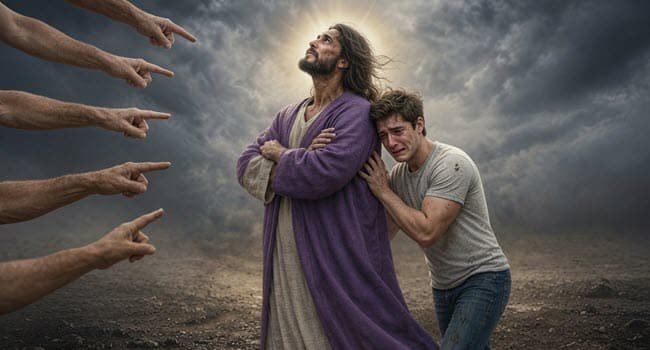
- He forgives and cleanses When you stumble, He is faithful and just to forgive and cleanse you (1 John 1:9). He intercedes for you as High Priest (Hebrews 7:25; 4:14-16). His blood keeps on cleansing (ongoing present tense in the Greek).
- He guides, leads, and provides He leads you beside still waters, restores your soul, and walks with you through the valley (Psalm 23 — fulfilled in Christ). The Holy Spirit (whom Jesus sends) guides into all truth (John 16:13). He promises to supply every need according to His riches in glory (Philippians 4:19).
- He protects and keeps “I give them eternal life, and they will never perish, and no one will snatch them out of my hand. My Father… is greater than all, and no one is able to snatch them out of the Father’s hand.” (John 10:28-29)
According to the perseverance of the saints, this new spiritual reality is irreversible.
A genuine new creation cannot be undone. God Himself preserves and keeps that person victorious in the race through the lifelong process of sanctification, convicting one of sin and leading to repentance. As the Apostle Paul declared: “He who began a good work in you will carry it on to completion until the day of Christ Jesus” (Philippians 1:6).
This glorious truth finds powerful expression in Paul’s victorious declaration near the end of his life:
“I have fought the good fight, I have finished the race, I have kept the faith. Now there is in store for me the crown of righteousness, which the Lord, the righteous Judge, will award to me on that day—and not only to me, but also to all who have longed for his appearing.” (2 Timothy 4:7-8)