
What Is the Remnant in the Bible?
“The Biblical Remnant:
A Faithful People Preserved by Grace”
In the Bible, the “remnant” refers to a small group of people left over after a larger population experiences judgment, disaster, exile, or widespread unfaithfulness—those who survive and (often) remain faithful to God, from whom He continues His purposes and promises of restoration.
God’s purpose for restoration through the remnant is to preserve a faithful people, keep His covenant promises, display His mercy and glory, and advance His redemptive plan culminating in Christ and the new creation.
He preserves a remnant after judgment so His promises to Abraham and David do not fail, refines a people who will know and worship Him, and prepares the way for the Messiah. In the New Testament, this remnant includes all who believe in Christ (Jews and Gentiles). Ultimately, it points to the full restoration of all things when God dwells with His redeemed people forever.
Old Testament Examples and Development
The idea appears early and is developed especially by the prophets:
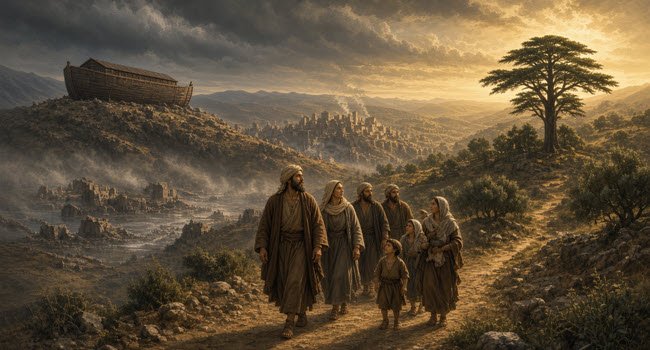
Early examples of preservation: Noah and his family after the Flood (Genesis 6–9); Lot’s family from Sodom (Genesis 19); Joseph, sent “to preserve for you a remnant on earth and to save your lives by a great deliverance” (Genesis 45:7).
In the time of Elijah: When Elijah thought he alone remained faithful, God declared, “I have reserved for myself seven thousand who have not bowed the knee to Baal” (1 Kings 19:18).
Prophetic promises of a returning remnant: After Assyrian and Babylonian judgments, God would preserve and restore a faithful portion of Israel/Judah.
Isaiah 10:20–22:“In that day the remnant of Israel, the survivors of the house of Jacob, will no longer rely on him who struck them down but will truly rely on the Lord, the Holy One of Israel. A remnant will return, a remnant of Jacob will return to the Mighty God. Though your people be like the sand by the sea, Israel, only a remnant will return.”
Isaiah 11:11–12 speaks of the Lord recovering “the remnant of his people” a second time and gathering the dispersed from the four corners of the earth.
Similar hope appears in Micah (e.g., 2:12; 4:6–7; 5:7–8; 7:18), Jeremiah (23:3; 31:7), Zephaniah (3:12–13), and Zechariah (8:6–12). The remnant is linked to restoration, repentance, and the promise of a new covenant (Jeremiah 31:31–34).
After the exile, the returned community often identified itself as this remnant (Ezra 9:8, 13–15; Haggai 1:12–14; Nehemiah 1:2–3).
New Covenant / New Testament
The remnant theme continues and is fulfilled and expanded in Christ:
Paul explicitly applies the Old Testament remnant concept to Jewish believers who accept Jesus as Messiah.
Romans 9:27–28 (quoting Isaiah):“Though the number of the Israelites be like the sand by the sea, only the remnant will be saved. For the Lord will carry out his sentence on earth with speed and finality.”
Romans 11:1–5: God has not rejected His people. Just as in Elijah’s day, “so too, at the present time there is a remnant chosen by grace.” This remnant is not based on works but on God’s grace.
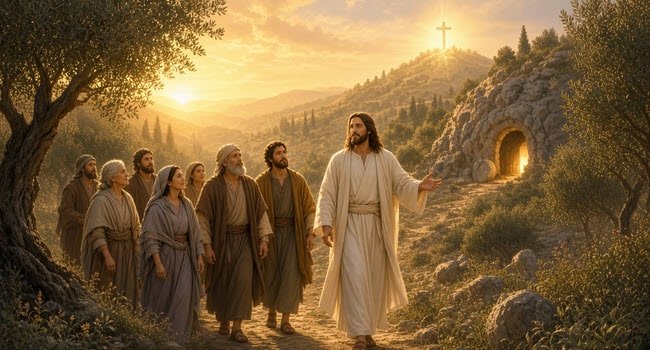
The early church began as a Jewish remnant that recognized Jesus, with Gentiles then grafted in (Romans 11:17–24), forming the broader people of God.
Revelation 12:17 describes the dragon making war on “the rest of her offspring—those who keep God’s commands and hold fast their testimony about Jesus” (often understood as the faithful remnant in the end times). A great multitude from every nation also appears as those who remain faithful (Revelation 7:9–10).
In short, under the New Covenant, the remnant consists of those (Jew and Gentile) who trust in Christ by grace, forming the true spiritual Israel / people of God.
Future/Eschatological Aspects
Many interpreters see a future purification and revelation of a remnant, especially of Israel, connected to the end-times:
- During the Tribulation / “time of Jacob’s trouble” (Jeremiah 30:7; Zechariah 13:8–9): Severe judgments refine Israel. A portion is cut off; a third (or remnant) is left and refined like silver, calling on the Lord.
- At Christ’s second coming (end of the Tribulation):
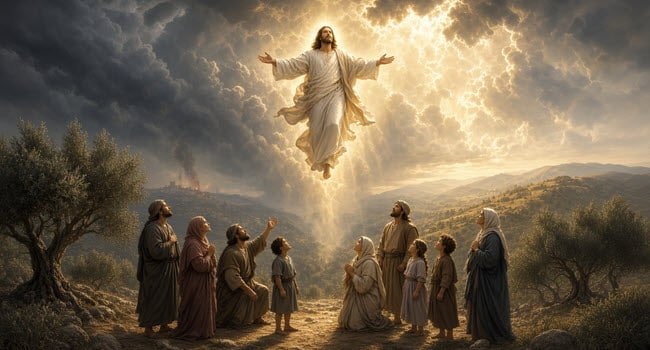
- Living Israelites are gathered and judged (Ezekiel 20:33–38). Rebels are purged; the faithful remnant enters the millennial kingdom.
- Living Gentiles are judged (Matthew 25:31–46, the sheep-and-goats judgment), often understood in relation to how they treated the Jewish remnant / “my brethren” during the Tribulation.
- The remnant (faithful believers, Jewish and/or broader) is protected or vindicated while judgment falls on their persecutors (see Revelation 12:17 in context of the dragon’s war and the larger judgments of Revelation 6–19).
The remnant is not a group that earns survival through superior works or escapes judgment by personal merit. It is the portion God Himself preserves by grace after (or in the midst of) judgment on widespread unfaithfulness. Judgment and grace operate together, not in opposition.
Classic examples:
- Noah and his family survive the flood (Genesis 6–9) by God’s gracious provision of the ark, not by their own righteousness making them deserving.
- The 7,000 in Elijah’s day who had not bowed to Baal (1 Kings 19:18) were reserved by God Himself.
- Prophets repeatedly speak of a remnant of Israel/Judah surviving Assyrian or Babylonian judgment and returning (Isaiah 10:20-22; Micah 4–5; Jeremiah 23; Zephaniah 3; etc.). Isaiah 1:9 explicitly ties their survival to God’s mercy: without it, they would have been like Sodom and Gomorrah.
Paul quotes these texts and makes the grace principle explicit:
“So too at the present time there is a remnant, chosen by grace. But if it is by grace, it is no longer on the basis of works; otherwise grace would no longer be grace.” (Romans 11:5-6)
“Though the number of the sons of Israel be as the sand of the sea, only a remnant of them will be saved.” (Romans 9:27, citing Isaiah)
The remnant is chosen by grace. Their preservation and faith are God’s gift, not the product of their performance.
Ephesians 2:8-9: “For it is by God’s grace that you have been saved through faith. It is not the result of your own efforts, but God’s gift, so that no one can boast about it. “
Conclusion
Throughout Scripture, the remnant stands as a powerful testimony to God’s unwavering faithfulness. From Noah’s family preserved through the flood, to the seven thousand who refused to bow to Baal, to the survivors of exile, and to Paul’s declaration of “a remnant chosen by grace” (Romans 11:5), the pattern remains the same: God never abandons His purposes or His people.
In its fullest biblical sense, the remnant is not a privileged ethnic group, a future elite, or a self-selected spiritual class. It is all the faithful—every person who belongs to God by grace. Yet this faithfulness is never earned. The Bible is clear: “All have sinned and fall short of the glory of God” (Romans 3:23). No one enters the remnant by personal goodness, religious effort, or moral achievement. It is solely by grace through faith—a gift received when a sinner surrenders to Christ, trusting in His finished work on the cross rather than their own strength.
This truth both humbles and comforts. It strips away any claim to superiority while assuring every believer that they are held securely by the same grace that has preserved God’s people across the ages. In a world marked by compromise and unbelief, the call remains simple and urgent: surrender fully to Christ. For in that surrender, we discover that we ourselves are part of the remnant God has kept for His glory.