
Servant of christ
Who is Jesus?
Who is Jesus?
Foreword
Who is Jesus? Why Some Believe, and Others Don’t.

Only by the drawing of God will anyone
truly know and experience Jesus, and come to know “Who is Jesus.”
In John 6:44, Jesus made it very clear that only through the Father’s drawing can anyone know Him and understand who He is. Throughout the centuries, theologians—and now AI—have pondered the question, “Who is Jesus?” In this essay, God’s ultimate plan for creation will be revealed and the question of “Who is Jesus” will be answered.
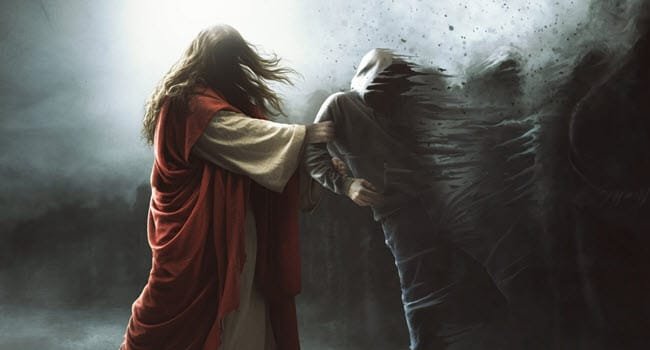
For those who believe in God, no explanation is necessary.
For those who do not believe in God, no explanation is possible.
This acknowledgment is not a retreat from reason. It is the recognition that the identity of Jesus of Nazareth confronts us with a claim so absolute that it either becomes the foundation of all reality or remains forever outside the reach of human demonstration. Scripture does not offer Jesus as one more religious founder among many. It presents Him as the axis upon which the entire created order turns—the One in whom the invisible God becomes visible, the eternal enters time, and the Holy One takes upon Himself the full weight of human sin and death.

The Eternal Word Before All Things
Before Bethlehem, before Abraham, before the foundations of the earth, He was. John’s Gospel opens not with a birth narrative but with a cosmic declaration:
“In the beginning was the Word, and the Word was with God, and the Word was God. He was in the beginning with God. All things were made through him, and without him was not any thing made that was made. In him was life, and the life was the light of men.” (John 1:1–4)
Paul presses the same truth further. Christ is “the image of the invisible God, the firstborn of all creation. For by him all things were created, in heaven and on earth, visible and invisible, whether thrones or dominions or rulers or authorities—all things were created through him and for him. And he is before all things, and in him all things hold together.” (Colossians 1:15–17)
He is not a creature elevated to divine status. “He is the Creator who enters His own creation.” Hebrews declares that the Son is “the radiance of the glory of God and the exact imprint of his nature, and he upholds the universe by the word of his power.” (Hebrews 1:3) The One who spoke galaxies into existence is the same One who would one day speak forgiveness to a dying thief.

The Fulfillment of Every Shadow
The Old Testament does not merely predict a coming Messiah; it is saturated with patterns, types, and promises that find their coherence only in Him. He is the seed of the woman who will crush the serpent’s head (Genesis 3:15). He is the offspring of Abraham in whom all the nations of the earth shall be blessed (Genesis 22:18; Galatians 3:16). He is the prophet like Moses whom the Lord will raise up (Deuteronomy 18:15). He is the suffering servant who is “pierced for our transgressions” and “crushed for our iniquities,” upon whom “the Lord has laid the iniquity of us all” (Isaiah 53:5–6). He is the Son of David whose throne is everlasting (2 Samuel 7:12–16; Psalm 89). He is the “Wonderful Counselor, Mighty God, Everlasting Father, Prince of Peace” (Isaiah 9:6).
Even the sacrificial system of Israel—the blood of lambs, goats, and bulls—was never an end in itself. It was a shadow cast backward from the cross. “Behold, the Lamb of God, who takes away the sin of the world!” (John 1:29). Every altar, every Passover, every Day of Atonement pointed forward to the moment when God Himself would provide the final sacrifice.
The Scandal of the Incarnation
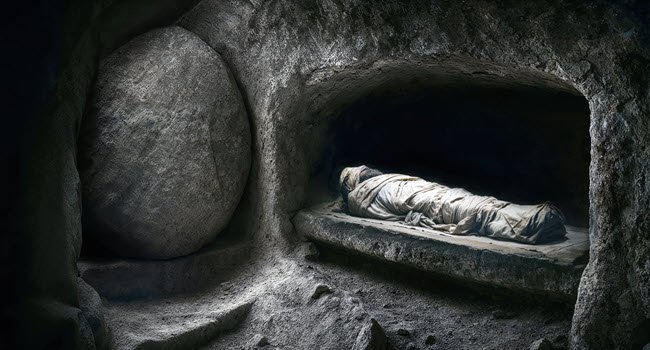
The eternal Word did not remain at a safe distance. “The Word became flesh and dwelt among us, and we have seen his glory, glory as of the only Son from the Father, full of grace and truth.” (John 1:14) He did not merely appear human; He became fully human while remaining fully God. He knew hunger, thirst, weariness, sorrow, and the agony of abandonment. He wept at a tomb. He felt the lash. He experienced the terror of death.
This is the hypostatic union—two natures, divine and human, united in one Person without confusion, without change, without division, without separation. The same hands that shaped the stars were nailed to a Roman cross. The same voice that commanded the seas cried out, “My God, my God, why have you forsaken me?” (Matthew 27:46; Psalm 22:1). The incarnation is not a mythic descent of a god in disguise. It is the deliberate, costly descent of the Holy One into the full condition of fallen humanity, yet without sin (Hebrews 4:15).

The Claims That Divide
Jesus did not leave His identity open to polite interpretation. He claimed the divine name: “Before Abraham was, I am” (John 8:58), deliberately echoing the self-revelation of Yahweh to Moses. He claimed authority to forgive sins—something only God can do (Mark 2:5–7). He claimed to be the exclusive way to the Father: “I am the way, and the truth, and the life. No one comes to the Father except through me.” (John 14:6). He claimed that to see Him is to see the Father (John 14:9). He claimed that the fate of every human being hinges on their response to Him (John 5:22–29).
These are not the words of a mere moral teacher. C.S. Lewis’s observation remains unavoidable: a man who said the things Jesus said would not be a great moral teacher. He would either be a lunatic, or the Devil of Hell, or the Lord Himself. The Gospels force the choice.
The Cross as the Center of Reality
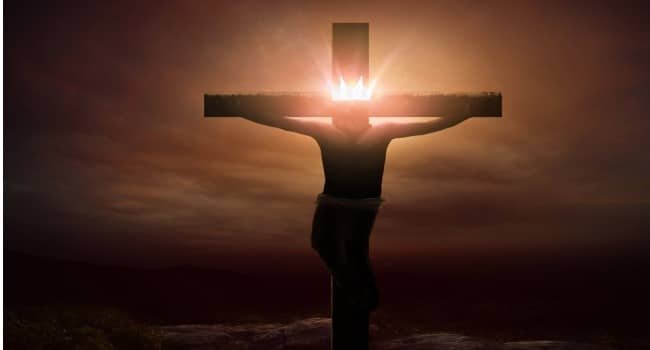
Everything converges at Golgotha. The cross is not an unfortunate interruption of an otherwise successful ministry. It is the reason the Son came. “The Son of Man came not to be served but to serve, and to give his life as a ransom for many.” (Mark 10:45) “He himself bore our sins in his body on the tree, that we might die to sin and live to righteousness.” (1 Peter 2:24) “For our sake he made him to be sin who knew no sin, so that in him we might become the righteousness of God.” (2 Corinthians 5:21)
Here the justice and the mercy of God meet without compromise. Sin is not overlooked; it is borne. The wrath that our rebellion deserves falls not upon us, but upon the sinless One who stands in our place. The curtain of the temple is torn from top to bottom (Matthew 27:51). Access to the Holy of Holies is opened—not by human effort, but by the blood of the Lamb.
The Empty Tomb and the Exalted Lord
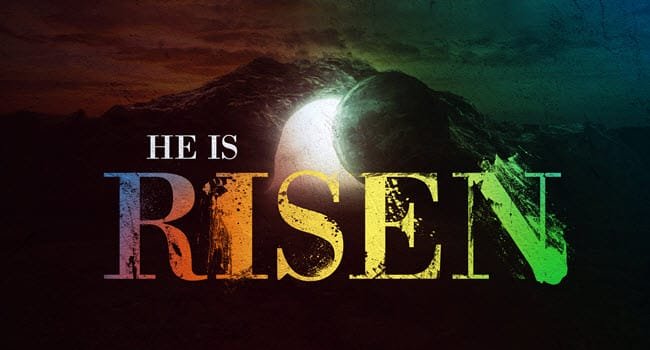
Death could not hold Him. “Why do you seek the living among the dead? He is not here, but has risen.” (Luke 24:5–6) The resurrection is not a spiritual metaphor. It is the bodily vindication of everything Jesus claimed. “He was declared to be the Son of God in power according to the Spirit of holiness by his resurrection from the dead.” (Romans 1:4)
Ascended to the right hand of the Father, He now intercedes as the great High Priest who “always lives to make intercession” for those who draw near to God through Him (Hebrews 7:25). He is the King who will return in glory to judge the living and the dead. He is the Bridegroom who will one day present His church to Himself “in splendor, without spot or wrinkle or any such thing” (Ephesians 5:27). He is the Alpha and the Omega, the first and the last, the beginning and the end (Revelation 22:13).
The Unanswerable Question
All of this—the eternal Word, the fulfillment of prophecy, the incarnate God, the crucified Savior, the risen Lord—confronts every person with the same question Jesus Himself posed to His disciples: “Who do you say that I am?” (Matthew 16:15)
No amount of historical investigation, philosophical argument, or moral admiration can finally settle the matter. Faith is not the conclusion of a syllogism; it is the gift of seeing. “Flesh and blood has not revealed this to you, but my Father who is in heaven.” (Matthew 16:17)
For those who believe, the explanation is unnecessary because the Reality has already spoken.
For those who do not believe, the explanation remains impossible, because the One who is the Light of the world is also the One who exposes the darkness that prefers itself to Him. The invitation still stands: “Come to me, all who labor and are heavy laden, and I will give you rest.” (Matthew 11:28) The offense remains: the claim that this one Man is the only Savior of the world. Between the invitation and the offense lies the mystery that no human words can resolve—only the Spirit of God can open eyes to see that Jesus Christ is Lord, to the glory of God the Father.
For those who believe in God, no explanation is necessary
for they have surrendered to Christ Jesus as Lord and Savior, and truth is with them.
For those who do not believe in God, no explanation is possible
for they have not surrendered to Christ Jesus as Lord and Savior, and truth is not with them.
John 14:6 Jesus answered, “I am the way and the truth and the life.