
Servant of Christ
What Does the Bible Say About the End Times?
Foreword
What Does the Bible Teach About the End Times?
What Does the Bible Teach About the End Times?
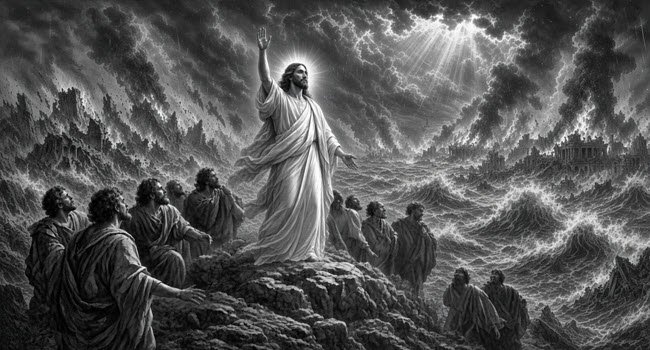
The Bible presents a coherent and unfolding vision of the end of the present age and the final renewal of all things under God’s rule. From the prophets of the Old Testament through the teachings of Jesus and the apostles, Scripture describes a future in which history reaches its appointed climax: the visible return of Christ, the resurrection of the dead, final judgment, and the creation of a new heaven and a new earth. While questions of precise sequence and timing have been understood differently by faithful readers across the centuries, the central promises remain clear and consistent. In the essay that follows, we will examine the main biblical teachings on this subject one by one.
Old Testament Foundations:
The Day of the Lord and Prophetic Hope
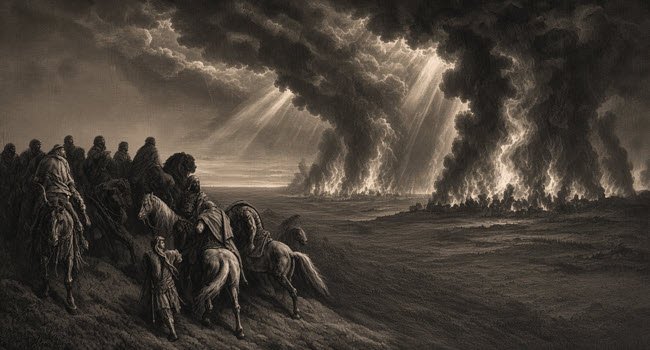
The Old Testament lays the essential groundwork for later New Testament teaching through its repeated references to the “Day of the Lord.” This day is consistently portrayed as a time of both severe judgment and gracious deliverance. The prophet Joel describes it as a day of darkness and gloom, of clouds and thick darkness, when the Lord roars from Zion and the earth shakes (Joel 2:1–11). Isaiah speaks of the Day of the Lord as coming with cruel wrath and fierce anger to make the land desolate and to destroy its sinners (Isaiah 13:6–13). Zephaniah warns that it will be a day of distress and anguish, of trouble and ruin, of darkness and gloom (Zephaniah 1:14–18). At the same time, the prophets hold out hope that those who call on the name of the Lord will be saved and that a remnant will be preserved and restored (Joel 2:32; Zephaniah 3:9–20).
Daniel’s visions add further detail. He sees successive earthly kingdoms rising and falling, followed by a final arrogant ruler who speaks against the Most High and oppresses the saints (Daniel 7:7–8, 19–25). Daniel also receives the prophecy of the “seventy weeks” that culminates in the cutting off of the Anointed One and the establishment of everlasting righteousness (Daniel 9:24–27). In the final chapter, he is told that there will be a time of distress such as has not happened from the beginning of nations, yet at that time God’s people will be delivered, and many who sleep in the dust of the earth will awake—some to everlasting life, others to shame and everlasting contempt (Daniel 12:1–2). These texts create a framework of expectation that later Scripture both fulfills and expands.
The Teachings of Jesus:
Signs, Tribulation, and the Coming of the Son of Man
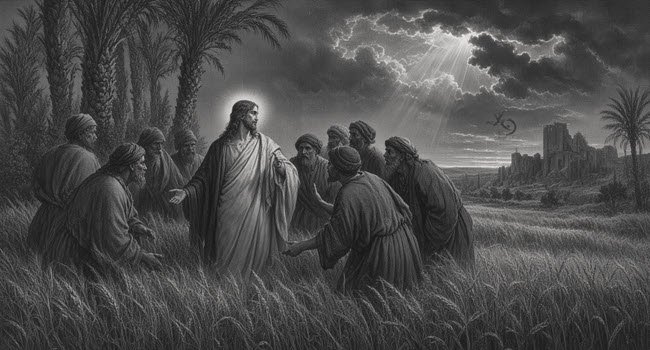
Jesus provides the most concentrated and authoritative teaching on the end times in the Olivet Discourse, recorded in Matthew 24–25, Mark 13, and Luke 21. Speaking privately to His disciples on the Mount of Olives, He answers their questions about the destruction of the temple and the sign of His coming and of the end of the age. He begins by warning them not to be deceived by false messiahs and not to be alarmed by wars and rumors of wars, for these things must happen, but the end is still to come. Nation will rise against nation, and kingdom against kingdom. There will be famines and earthquakes in various places. All these are merely the beginning of birth pains (Matthew 24:4–8).
Jesus continues by describing persecution of His followers, the rise of false prophets, the increase of wickedness, and the cooling of love among many. Yet He promises that the one who stands firm to the end will be saved, and that the gospel of the kingdom will be preached in the whole world as a testimony to all nations before the end comes (Matthew 24:9–14). He then speaks of a time of great distress unequaled from the beginning of the world until now—and never to be equaled again (Matthew 24:21). Immediately after that distress, the sun will be darkened, the moon will not give its light, the stars will fall from the sky, and the heavenly bodies will be shaken. At that time the sign of the Son of Man will appear in the sky, and all the peoples of the earth will mourn. They will see the Son of Man coming on the clouds of the sky, with power and great glory. He will send His angels with a loud trumpet call, and they will gather His elect from the four winds (Matthew 24:29–31).
Jesus repeatedly stresses that no one knows the day or hour—not the angels in heaven, nor the Son, but only the Father (Matthew 24:36). Therefore His followers must keep watch and be ready, living as faithful servants who will be found doing their master’s will when he returns (Matthew 24:42–51; 25:1–13). The discourse concludes with the parable of the sheep and the goats, in which the Son of Man sits on His glorious throne and separates people as a shepherd separates sheep from goats, welcoming the righteous into eternal life and consigning the unrighteous to eternal punishment (Matthew 25:31–46).
Apostolic Teaching:
The Return of Christ, Resurrection, and Readiness
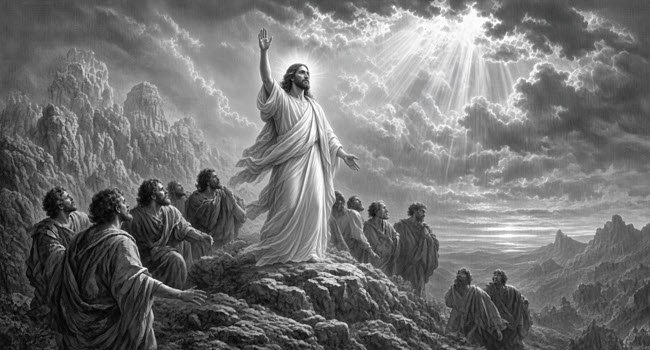
The apostles build directly upon Jesus’ teaching. Paul writes to the Thessalonians that the Lord Himself will come down from heaven with a loud command, with the voice of the archangel and with the trumpet call of God, and the dead in Christ will rise first. After that, those who are still alive and are left will be caught up together with them in the clouds to meet the Lord in the air. And so they will be with the Lord forever (1 Thessalonians 4:16–17). He urges believers not to grieve like those who have no hope, for this teaching is meant to bring comfort and encouragement (1 Thessalonians 4:13, 18).
In his first letter to the Corinthians, Paul further explains that flesh and blood cannot inherit the kingdom of God, nor does the perishable inherit the imperishable. Listen, he says, I tell you a mystery: we will not all sleep, but we will all be changed—in a flash, in the twinkling of an eye, at the last trumpet. For the trumpet will sound, the dead will be raised imperishable, and we will be changed (1 Corinthians 15:50–52). He also warns the Thessalonians that the day of the Lord will not come until the rebellion occurs and the man of lawlessness is revealed—the man doomed to destruction who opposes and exalts himself over everything that is called God or is worshiped, even setting himself up in God’s temple and proclaiming himself to be God (2 Thessalonians 2:1–4).
Throughout the apostolic letters, the emphasis falls on readiness, moral seriousness, and confident hope rather than on speculative calculation of dates. Believers are called to live as children of the light, self-controlled and alert, putting on faith and love as a breastplate and the hope of salvation as a helmet (1 Thessalonians 5:4–8). The return of Christ is presented as both a purifying hope and a source of deep comfort.
The Vision of Revelation:
Judgment, Victory, and New Creation
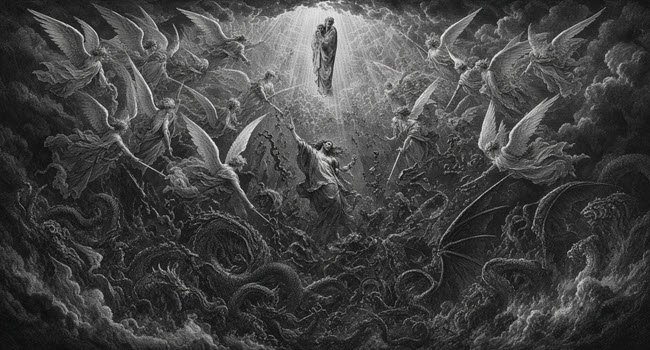
The book of Revelation gathers the earlier strands of biblical teaching into a sweeping visionary narrative. Written to encourage persecuted believers, it portrays a time of intense conflict on earth, the rise of oppressive political and religious powers that demand worship, and a series of divine judgments symbolized by seals, trumpets, and bowls (Revelation 6–16). A beastly figure emerges who exercises authority, performs great signs, and forces all people to receive a mark in order to buy or sell (Revelation 13). Yet the book repeatedly affirms that God remains sovereign and that the Lamb who was slain is worthy to open the scroll and execute God’s purposes (Revelation 5).
At the decisive moment, heaven opens, and Christ appears as a rider on a white horse, called Faithful and True, judging and making war with justice. On His robe and on His thigh He has the name written: King of kings and Lord of lords (Revelation 19:11–16). The forces of evil are defeated, and Satan is bound for a thousand years (Revelation 20:1–3). After this period comes the final judgment. The dead, great and small, stand before the throne, and books are opened. Another book is opened, which is the book of life. The dead are judged according to what they have done as recorded in the books. Anyone whose name is not found written in the book of life is thrown into the lake of fire (Revelation 20:11–15).
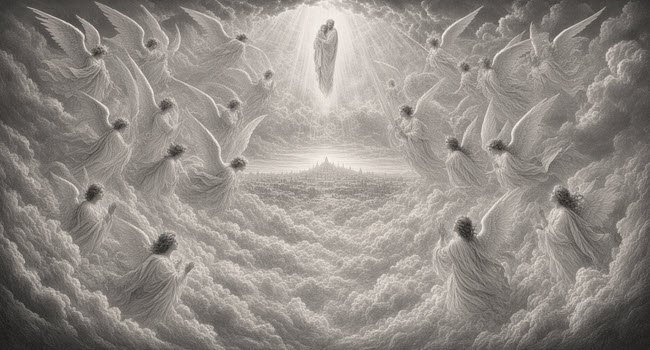
The story does not end in destruction. John sees a new heaven and a new earth, for the first heaven and the first earth have passed away. He hears a loud voice from the throne saying, “Look! God’s dwelling place is now among the people, and he will dwell with them. They will be his people, and God himself will be with them and be their God. He will wipe every tear from their eyes. There will be no more death or mourning or crying or pain, for the old order of things has passed away” (Revelation 21:1–4). The river of the water of life flows from the throne of God and of the Lamb, and the leaves of the tree are for the healing of the nations. God’s servants will see His face, and they will reign for ever and ever (Revelation 22:1–5).
Conclusion:
The Meaning and Message for Believers
Taken together, these biblical texts present a unified trajectory. History is neither endless nor cyclical; it moves toward a definite conclusion determined by God. Evil will be judged, the righteous will be vindicated, and creation itself will be renewed. The same Jesus who once came in humility will return in glory. Death will be swallowed up in victory. God will dwell with His people in unbroken fellowship.
This teaching is intended to cultivate watchfulness without anxious speculation, perseverance in the face of hardship, a sense of mission’s urgency, and deep comfort in the midst of grief and loss. Believers are called to live in the light of the coming day, holding loosely to the things of this age and fixing their hope fully on the grace to be brought to them when Jesus Christ is revealed. As the final chapter of Scripture declares, “He who testifies to these things says, ‘Yes, I am coming soon.’ Amen. Come, Lord Jesus” (Revelation 22:20). The biblical message of the end times is ultimately a message of promise: the God who began the work of redemption will bring it to completion, and His people will dwell with Him forever.