
Servant of Christ
The Bondservant of the Lord
Foreword:
The Bondservant of the Lord
From Indenture to Lifelong Devotion:
The bondservant theme runs through Scripture—from the Mosaic laws, where a servant might freely choose lifelong service out of love, to the prophets, psalms, and apostles who claim the title with honor, and finally to Jesus, who came not to be served but to serve.
This essay traces that path, showing that biblical bond service is not forced subjection but willing devotion to God and others. In a culture that prizes independence, it offers a different vision: true freedom is found in belonging wholly to the Master who first served us.

The Biblical Concept of the Bondservant
The idea of the bondservant—rendered in Hebrew primarily as ‘ebed (servant, slave, or bondsman) and in Greek as doulos (one bound in service, slave, or bondservant)—runs throughout Scripture. It describes economic and social relationships under the Law of Moses, the privileged identity of God’s people and His chosen messengers, and, most profoundly in the New Testament, the voluntary, total self-surrender of believers to Jesus Christ. Far from endorsing the chattel slavery of later centuries, the biblical pattern often emphasizes temporary indenture, protections, and, above all, a willing, lifelong devotion rooted in love.

Servants of the Lord:
The Bondservant Theme in the Old Testament
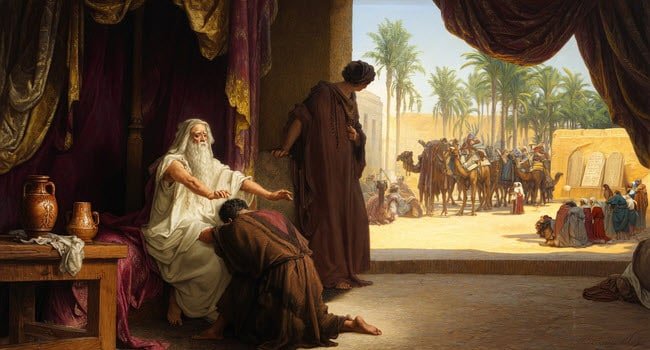
Exodus 22 addresses restitution and theft. Verse 3 states that if a thief is caught and has nothing with which to make restitution, “he shall be sold for his theft.” This reflects one pathway into temporary servitude: judicial sale to repay debt. The fuller regulation of Hebrew servants appears immediately prior in Exodus 21:2–6. A Hebrew servant was to serve six years and go free in the seventh without payment. If he entered single, he left single; if married, his wife left with him. If the master provided a wife who bore children, the wife and children remained the master’s, and the man went free alone—unless the servant voluntarily declared, “I love my master, my wife, and my children; I will not go out free.” In that case the master brought him before God (or the judges), to the door or doorpost, and pierced his ear with an awl; he then served forever. This voluntary, lifelong commitment is the clearest Old Testament picture of the true bondservant: one who, having tasted freedom, chooses permanent belonging out of love and loyalty.
The broader Law of Moses develops these principles with care. Deuteronomy 15:12–18 reiterates the six-year term for a Hebrew man or woman, requires generous provision upon release (flock, grain, wine), and again allows the ear-piercing ceremony for one who loves the master and chooses to remain. Leviticus 25:39–46 addresses the poor Israelite who sells himself: he is not to be treated as a slave but as a hired worker or sojourner until the Year of Jubilee, when he and his children return to their family and ancestral land. Israelites are repeatedly reminded that they themselves are the Lord’s servants, whom He brought out of Egypt; therefore they must not be sold into permanent slavery or ruled ruthlessly. Foreign servants could be acquired permanently and bequeathed, yet even they received Sabbath rest, and the right to participate in certain festivals once circumcised. The Law thus limited duration for Israelites, mandated humane treatment, protected against abuse (a master who permanently injured a servant forfeited the servant), and grounded the entire system in Israel’s own redemption from bondage.
Isaiah, Proverbs, Psalms, and the Wider Old Testament
Beyond legal codes, the language of servant and bondservant becomes a title of honor and identity. Isaiah contains the famous Servant Songs (Isaiah 42:1–4; 49:1–6; 50:4–9; 52:13–53:12). The Servant is chosen, endowed with the Spirit, a light to the nations, and ultimately the one who suffers, bears the sins of many, and is exalted. While the Servant can represent Israel collectively, the New Testament and Christian tradition see the ultimate fulfillment in the Messiah. Israel itself is repeatedly called “my servant” (Isaiah 41:8–9; 44:1–2), chosen and formed by the Lord even in exile. The faithful remnant are likewise “my servants.”
The Psalms frequently place the psalmist in the posture of “your servant.” David and others appeal to God on the basis of this relationship (Psalm 19:11, 13; 27:9; 31:16; 86:16; 116:16; 119 throughout). Psalm 40:6–8, with its language of an opened ear and delight in doing God’s will, has long been linked by some interpreters to the ear-piercing of the willing bondservant. Proverbs offers practical wisdom on the relationship: a wise servant may rule over a shameful son and share the inheritance (Proverbs 17:2); kings and masters are to govern justly; diligence and faithfulness mark the good servant.
Elsewhere the title is bestowed on the greatest figures: Abraham, Moses (“the servant of the Lord”), Joshua, Caleb, David, the prophets, and even Job. To be the Lord’s ‘ebed is not degradation but high privilege—complete availability to the divine will.
Bondservants of Christ: Paul and the Apostolic Witness
In the New Testament, the Greek doulos carries forward the same range of meaning, now transformed by the gospel. Paul repeatedly introduces himself as “a bondservant of Christ Jesus” (Romans 1:1; Philippians 1:1; Titus 1:1; cf. Galatians 1:10). James, Peter, and Jude use the same self-designation. This is no mere polite formula; it declares Christ’s ownership, total availability, and derived authority. Believers as a whole are described as having been set free from sin in order to become slaves of righteousness and of God (Romans 6:16–22). The paradox is deliberate: true freedom is found in belonging wholly to Christ.
Practical instructions appear for those still in the social institution of slavery (Ephesians 6:5–9; Colossians 3:22–4:1; 1 Timothy 6:1–2; Titus 2:9–10; 1 Peter 2:18–21). Slaves are to obey earthly masters as serving the Lord, and masters are warned that they too have a Master in heaven who shows no partiality. The letter to Philemon pushes the logic of the gospel further: the runaway Onesimus is to be received “no longer as a bondservant but more than a bondservant, as a beloved brother.” The equality of all in Christ (Galatians 3:28; Colossians 3:11) relativizes earthly status without immediately abolishing every social structure.
The Servant King: Jesus’ Teaching and Example
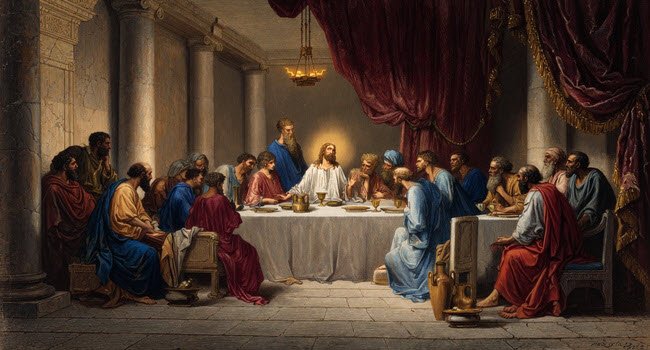
Jesus Himself is the supreme model and teacher of servanthood. He declared, “For even the Son of Man came not to be served but to serve, and to give his life as a ransom for many” (Mark 10:45; cf. Matthew 20:28). When the disciples argued about greatness, He inverted the world’s order: “Whoever would be great among you must be your servant, and whoever would be first among you must be slave of all” (Mark 10:43–44; Matthew 20:26–27). At the Last Supper He washed the disciples’ feet—the task of the lowest servant—and said, “If I then, your Lord and Teacher, have washed your feet, you also ought to wash one another’s feet… a servant is not greater than his master” (John 13:14–16). In Luke 22:27, He states simply, “I am among you as the one who serves.” Parables frequently portray faithful and unfaithful servants, underscoring accountability to the Master.
Jesus thus fulfills the Isaiah Servant, lives the voluntary lifelong devotion pictured in Exodus 21, and redefines greatness as radical self-giving service.
Conclusion: Freedom in Belonging
From the temporary indenture and voluntary lifelong bond of the Mosaic Law, through the honored title given to patriarchs, prophets, and the nation itself, to the apostolic self-identification as doulos of Christ and Jesus’ own example of the Servant who gives His life, the Bible presents the bondservant as one whose will is gladly surrendered. The ear pierced at the doorpost becomes, in the New Testament, the heart claimed by the Redeemer who purchased His people with His blood. Far from dehumanizing, biblical bond service to God and to one another is the path to true freedom, dignity, and greatness. In Christ, the believer discovers that to be bound forever to the Master who first served us is the highest calling and the deepest joy.